
The Complete Library
Arts integration or every classroom. Filter and sort resources based on your classroom.
Angle Face: A Geometry Drawing Game
Students reinforce their understanding of four types of angles by creating expressive faces using a variety of angles. In response to angles called out by the teacher, students incorporate different angles into their drawings to create characters with unique expressions, such as “Sad Angle Faces,” “Happy Angle Faces,” and “Very Surprised Angle Faces.”
Poster Design with Area & Perimeter
Students begin by studying classic posters, examining how geometric shapes, layout, and color contribute to a design's overall mood and effectiveness. They then apply these ideas to create compelling flyers that incorporate text, shapes, and images while demonstrating their understanding of area and perimeter.
Rhythm Equivalence Game
Students will use whole, half, quarter, and eighth notes to represent fractional parts of a measure. Students will play/clap these rhythms in pairs/groups to create equivalent measures.
Geometry in Photography
Students will examine three photographs and identify as many geometric shapes, elements, and concepts as possible through a guided discussion. While students evaluate the photographs for their geometric connections, the provided questions will encourage them to evaluate core photographic principles, such as light, composition, and emotion.
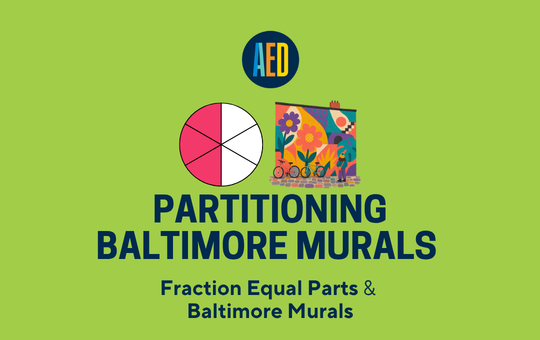
Partitioning Baltimore Murals
Students view murals from various locations throughout Baltimore City and discuss how partitioning was used to divide them into equal parts (halves, thirds, fourths, sixths, etc.). Teachers will also discuss the background, location, and motivation for creating the murals.
Equation Scenes
Students use a word problem and a guided flow chart to identify key information, select the appropriate operation, and solve the problem. They then write and perform a short scene that brings the word problem to life, using movement and dialogue to demonstrate their mathematical understanding.
Color By Divisor
Students use their understanding of divisibility and prime numbers to complete a color-by-number artwork. For each number, students determine which divisors apply and use the corresponding colors to fill in the picture.

Associative Property: Row Home Design
Students become architects designing a block of Baltimore row homes. They will sketch rows of connected row homes and use floors and windows to model the Associative Property of Multiplication.
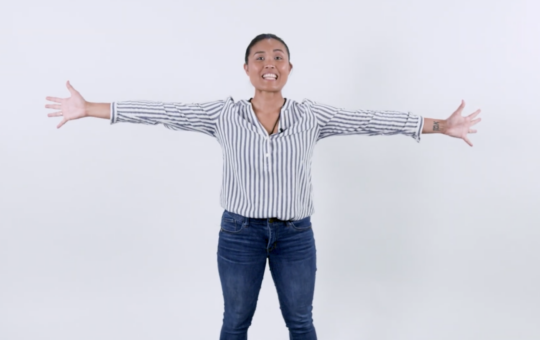
Extreme Settings
Rachael Barillari and Cori Dioquino, bring the novel Hatchet and the Wit & Wisdom grade 4 "Extreme Settings" to visceral and sensory life through theater strategies including scene sequence, sense embodiment, the power of punctuation, setting analysis, and improv.

