
Arts Integrated Math Resources
Search by key word or filter by grade level, curriculum, art form, standard, topic, and/or author to find the arts integrated experience that best fits your classroom.
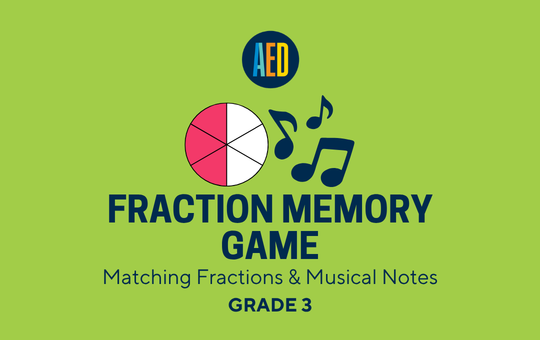
Fraction Memory Game
Students deepen their understanding of fractions by matching musical note values with their corresponding fractions. For example, a student who picks up a card with 3 quarter notes will be tasked with finding the matching card representing ¾.
Equation Scenes
Students use a word problem and a guided flow chart to identify key information, select the appropriate operation, and solve the problem. They then write and perform a short scene that brings the word problem to life, using movement and dialogue to demonstrate their mathematical understanding.
Color By Divisor
Students use their understanding of divisibility and prime numbers to complete a color-by-number artwork. For each number, students determine which divisors apply and use the corresponding colors to fill in the picture.
10-15 MinsAdditionAddition Within 10Addition Within 20DifferentiateGrade 1KinderMathSmall GroupVisual Art
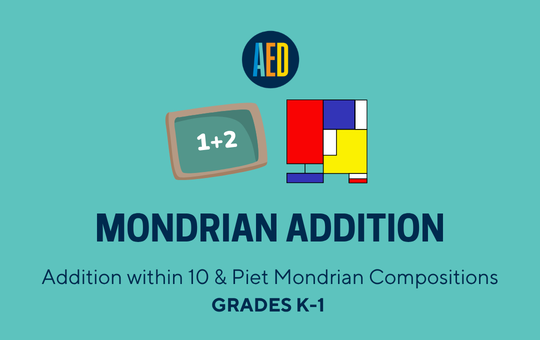
Mondrian Addition
Students will use the elements of visual art to create a composition inspired by painter Piet Mondrian that models and solves addition problems within 10, with an optional extension of adding within 20.
10-15 MinsDifferentiateGrade 1KinderMathMovement & DanceMusicSmall GroupSubtractionSubtraction Within 10
Clap. Snap. Stomp. Subtract!
Students create and perform body percussion patterns using clapping, stomping, and snapping to represent and solve subtraction equations within 10.
Head Shoulders Knees Toes Place Value
Students use the familiar tune and movements of “Head, Shoulders, Knees, and Toes” to identify the place value of each digit in a multi-digit number.
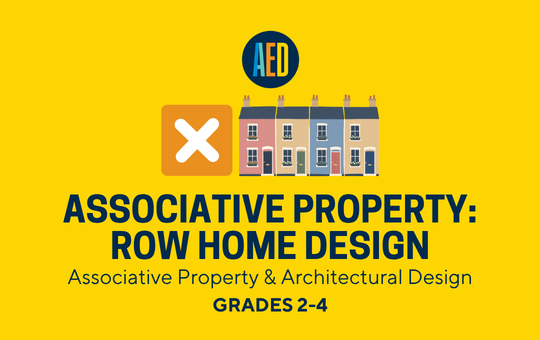
Associative Property: Row Home Design
Students become architects designing a block of Baltimore row homes. They will sketch rows of connected row homes and use floors and windows to model the Associative Property of Multiplication.
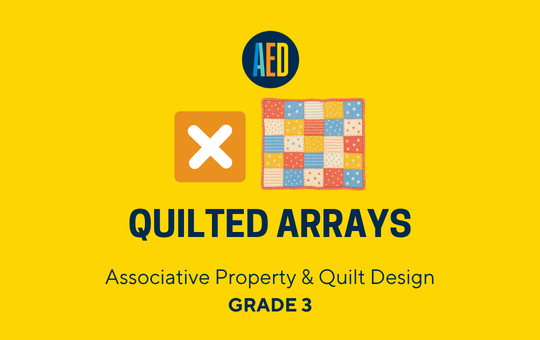
Quilted Arrays
Students use folding to create a paper quilt to explore the Associative Property of Multiplication. Students fold their paper in different sequences to create the same number of equal sections, discovering that changing how the folds are grouped changes the process but not the total number of panels.
