
The Complete Library
Arts integration or every classroom. Filter and sort resources based on your classroom.
Polygon Beats
Students will learn about the two most basic time signatures in music, 3/4 (“three four”), also known as “3 beat,” and 4/4 (“four four”), also referred to as “4 beat.” Students will then apply their knowledge of 3-sided and 4-sided polygons, including triangles and squares, by drawing the shapes that match the time signatures they hear in a provided playlist of song snippets.
Equation Scenes
Students use a word problem and a guided flow chart to identify key information, select the appropriate operation, and solve the problem. They then write and perform a short scene that brings the word problem to life, using movement and dialogue to demonstrate their mathematical understanding.
Visual Art Addition Within 100
Students analyze a piece of jewelry by Douriean Fletcher to practice looking for groups, patterns, and quantities. Through Notice & Wonder and partner discussion, students connect what they see to strategies for adding two-digit numbers within 100.
Head Shoulders Knees Toes Place Value
Students use the familiar tune and movements of “Head, Shoulders, Knees, and Toes” to identify the place value of each digit in a multi-digit number.
Circle of Skip Counting!
Students practice skip counting while passing a clap around a circle to a steady beat. The group skip-counts by 2s, 5s, or 10s, saying one number with each clap. As students become more comfortable, increase the tempo to build fluency, listening, and automaticity.

Associative Property: Row Home Design
Students become architects designing a block of Baltimore row homes. They will sketch rows of connected row homes and use floors and windows to model the Associative Property of Multiplication.
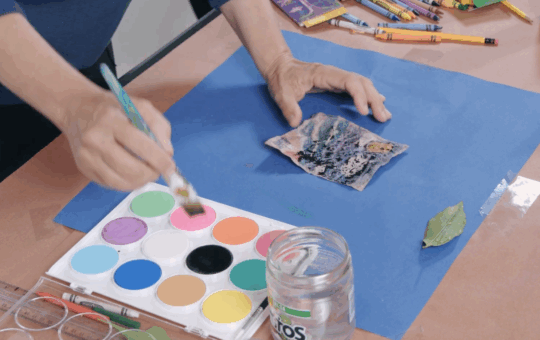
Coloring the Seasons
Teaching Artist Linda Whelihan worked with Sarah Aguda, Arts Integration Coordinator, to create a vibrant and colorful exploration of the second grade Wit & Wisdom Module "A Season of Change." Students will explore the changing seasons by learning how to create visual vocabulary decks, making chameleon-shaped printing plates, and creating crayon-resist nature journals.
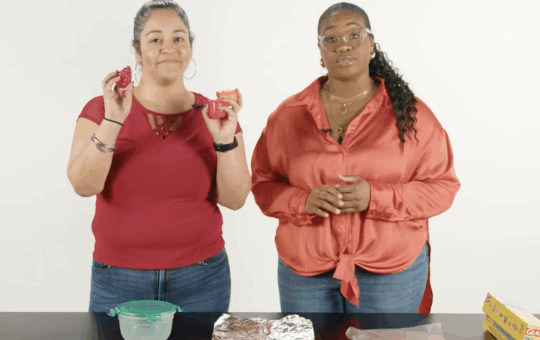
How Matter Works
Join teaching artist Kammeran Giggers and Baltimore City teacher Lindsey Winand as they bring movement, song, and improv to this second grade SABES science unit on states of matter!
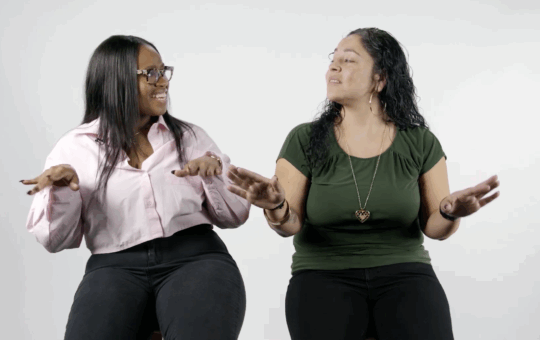
What Do Plants Need?
Lindsay Winand and Kammeran Tyree Giggers use improvisation to create a theater-based arts integrated overlay for the grade 2 SABES Unit "What Do Plants Need." Students will delve into the basic needs of plants and pollinators through tableaux, "Yes, And" exercises, and a visually rich approach to the Driving Question Board.

